In the early 2000s, at a Nestlé Purina research center, 90 cats entered an experiment that would last for years. They were between seven and seventeen years old. The researchers wanted to understand how much nutrition could influence the way they aged.
The cats were divided into three groups. They shared the same environment and received the same veterinary monitoring. Their foods started with a common base. The difference lay in the nutrients added to their bowls.
At first, there was little to hint at what would follow. But as the years passed, a difference began to emerge.
The third bowl contained a particular combination
The first group received the control diet. The second received a version enriched with two antioxidants: vitamin E and beta-carotene.
For the third group, the researchers went further. They combined those antioxidants with whole chicory root and oils supplying omega-6 and omega-3 fatty acids. Three groups of nutrients, brought together in one complete food.
Then came the part that could not be rushed: time. The researchers weighed the cats, tracked their body condition, performed veterinary examinations and took blood samples. The protocol called for each cat to remain on its assigned diet for life.
A few days of enthusiastic eating would not answer the question they were asking. They wanted to know whether this nutritional difference could show up, years later, in how long the cats lived.
A result that means more than a number
The published findings were striking. In an analysis adjusted for the cats’ starting ages, the researchers estimated that the group receiving the complete nutrient combination lived about a year longer than the control group. A follow-up published in 2008, after seven and a half years, found a similar difference.
About a year. If you share your home with a cat, it is hard to read that as just a number. It becomes mornings with a paw on your pillow. Homecomings. Evenings when you put off getting up because someone has fallen asleep on your lap.
That figure is a statistical estimate from a study of complete diets. It is not an extra year promised to every cat, and the study did not test EverLife Cat. But it gives this particular combination of nutrients a compelling research story.
That story also has another chapter. And it begins with a patent.
The patent—and the date that comes next
A European patent application was filed in September 2004. The patent, EP1637041B1, was granted to Nestec and described the use of the nutrient combination to improve longevity in older cats.
The scientific results were published as early as 2006. Commercial use of the invention was covered by a European patent. To follow the next chapter, fast-forward to one particular date.
In September 2024, twenty years after the filing, that European patent expired.
The original research centered on a cat’s complete diet. At home, that raises a familiar practical question: how do you make room for those nutrients when you already have a food that suits your cat?
Anyone who has tried changing a cat’s food knows the negotiation. You open a new pouch with the best intentions. Your cat approaches, takes one sniff, and walks away.
What if it were as simple as offering a treat?
This is the everyday problem EverLife Cat set out to address. Drawing inspiration from the three nutrient groups studied, the brand brings vitamin E and beta-carotene, whole chicory root, and omega-6 and omega-3 fatty acids together in a lickable stick.
The idea is easy to picture. A small sachet you open, a creamy texture to lick, a moment you can share. The brand’s suggested routine is one stick a day, alongside your cat’s usual food.
No tablet to persuade them to swallow. No powder to hide. No new range of food to introduce just to try the product.
That simplicity matters. A formula can sound interesting on paper; it still needs to fit into an ordinary day with a real cat and some very definite preferences. The stick gives owners a straightforward way to offer it.
EverLife Cat turns that nutritional inspiration into a format designed for daily life. The brand’s website sets out the ingredients and feeding instructions, so you can take a closer look at what is inside the little sachet.
The moments you would choose more of
When you think about your cat, you probably do not start by counting years. You think about the way they wait for you. Their exact spot on the sofa. The sound of their paws in the hallway.
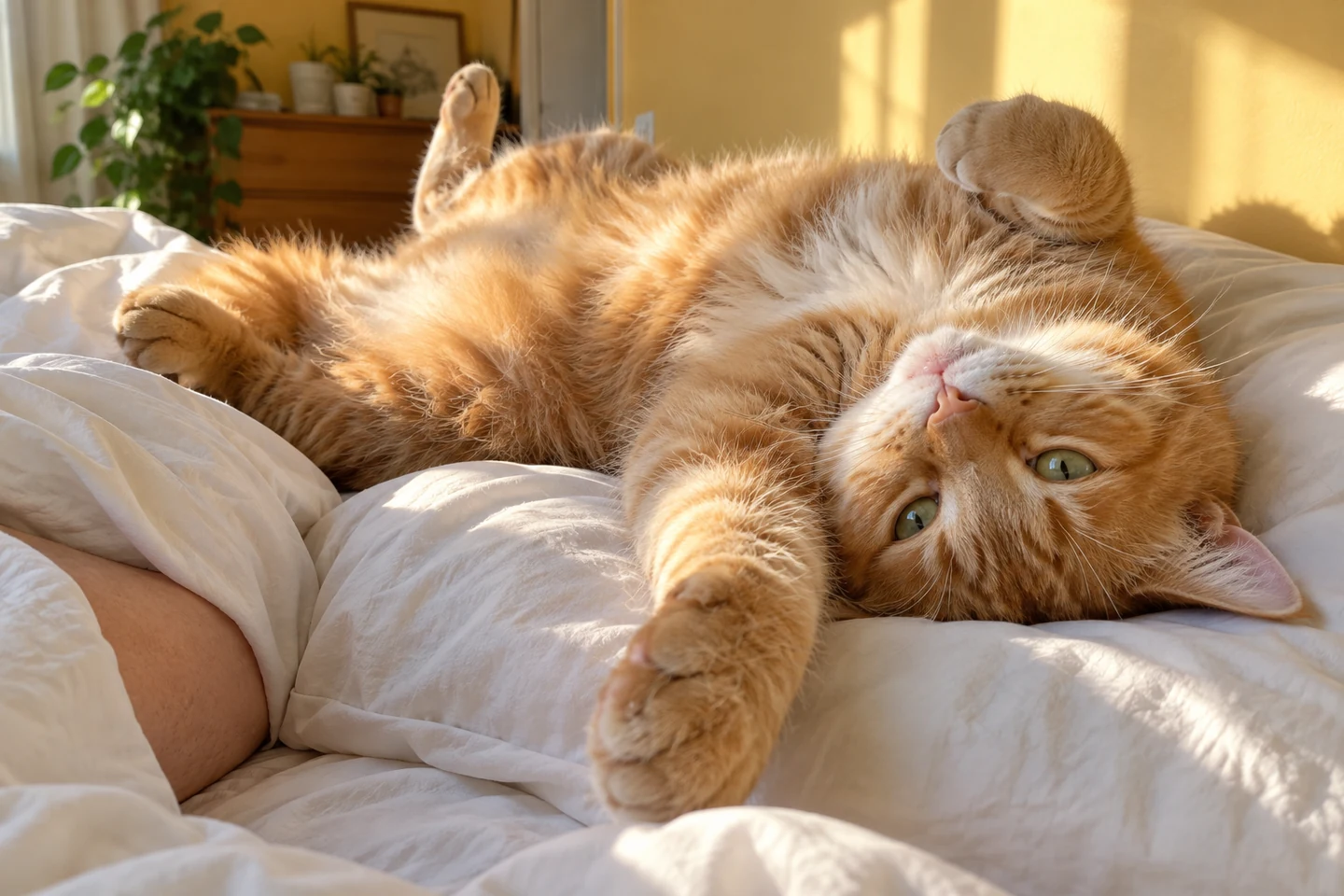
Perhaps you think about the half of the bed you surrender every night, while pretending to object.
That wish for more time together is what makes this story resonate: a long-running study, a particular nutrient combination, a European patent reaching its end, and a simple idea for an everyday ritual.
The treat is called EverLife Cat. You can explore its ingredients and see how to offer it to your cat through the link below.
Sources & further reading
References for this partner article. Study results apply to the research conditions described.
- Effect of Nutritional Interventions on Longevity of Senior Cats Cupp et al., International Journal of Applied Research in Veterinary Medicine, 2007
- The Role of Nutritional Interventions in the Longevity and Maintenance of Long-Term Health in Aging Cats Cupp et al., International Journal of Applied Research in Veterinary Medicine, 2008
- European patent EP1637041B1: Improving longevity of elderly cats European Patent Office, reproduced by Google Patents, 30 April 2008
- European patent expiry: official bulletin of September 25, 2024, p. 239 Netherlands Patent Office, 25 September 2024
- EverLife Cat: product ingredients and feeding instructions EverLife Cat — information supplied by the partner brand, Accessed 2026-10-15
A story worth sharing?
Send a little perspective to another animal person.
Advertorial produced for EverLife Cat. Prepared with AI assistance and checked against the linked sources. Illustrations are AI-generated. Read our editorial standards.
EverLife Cat
See what is inside the stick, how to serve it and how it fits into your cat’s daily routine.
Discover EverLife Cat everlife.cat